In a previous post, I wrote about why we should be prepared, what that means for me, and how I came to that realization. Today, I’d like to talk about the prepper mindset.
I had some valuable experiences and I gained tremendous amount of experiential knowledge over that long hurricane season of 2004—but was I prepared? Was I fully invested in the lifestyle?
Was I ready to become self-reliant?
The Mindset
No, I wasn’t completely ready to become self-reliant, but every time I started to relax my guard and think, nah, nothing bad will happen, we won’t lose power, we won’t get hit with that storm…my subconscious kicked memories to the forefront that kept me focused.
Then I embraced the prepper mindset.
I started thinking about not just the recent hurricanes, but all the dire situations and emergencies I’d survived and I started to glean nuggets of truth from them, things that were true across the board.

Like the blizzard in the early 1990s that crippled my home state of Delaware and shut everything down for days. I was in high school and it was all terribly exciting. We had to hike through our neighborhood, through snow up to my knees to the grocery store a few blocks (and hills) away for supplies after we began to run out of food a couple days into the event.
The roads weren’t plowed (Delaware only has 2 or 3 plows, I think) and the stores were open, but they didn’t have a lot. We had power and a wood burning fireplace with plenty of firewood, so we had water and warmth. But toward the end of that week, things got a little dicey. We should have had more than a couple days of food on hand at the house, that was obvious to me as a teenager.
Lesson not learned, evidently, until I survived a couple hurricanes later in life (like 15 years later). Luckily, that kind of snow storm was a once-in-a-hundred-years event in Delaware, and I never saw it’s like again. But I moved to Wisconsin eventually and the snow up there dwarfed what I saw in Delaware as a pimply faced, voice-cracking high school student.
Did Wisconsin grind to a halt under the blanket of snow? Hell no, they plowed the roads and we didn’t miss a single day of school despite having almost 2 feet of snow on the ground from Christmas to April. My kids hated it—and how I told them stories about how every time there was a forecast for snow my sister and I would stay up late, wake up early and listen for the phone to ring…signaling our mom—the driver’s ed teacher—that school was delayed, or God willing, cancelled.
Flash forward to September 11, 2001 and another powerful set of memories that shoved me toward preparedness. I was working on my law degree at the time and remember the horror stories broadcast on the news, watching people stream away from downtown NYC in a massive horde of fear, all covered in sweat, blood and that creepy-as-shit white gray dust that seemed to be everywhere.
I remember watching the news live with my classmates when the second tower fell and that wall of smoke and debris rolled down the street right at the camera, then everything went gray and all you could hear was coughing and that eerie whistling-beeping of the first responders locator alarms.
I remember stepping out I’d to the school parking lot (classes had been canceled the rest of the day) and watching as a pair of fully armed F–16s screamed overhead on their way to NYC from Dover Air Force Base. Everything was surreal. And it got me and a LOT of other people thinking—what if that had been me stuck in downtown New York? What the hell would I have done? I thought a lot, I made a lot of lists, I learned, I watch, and I planned.
Then came the great northeast blackout of 2003, the summer before my wedding, the summer before the hurricanes. I watched that from my apartment in Florida and took a lot of notes (yeah we move around a lot).
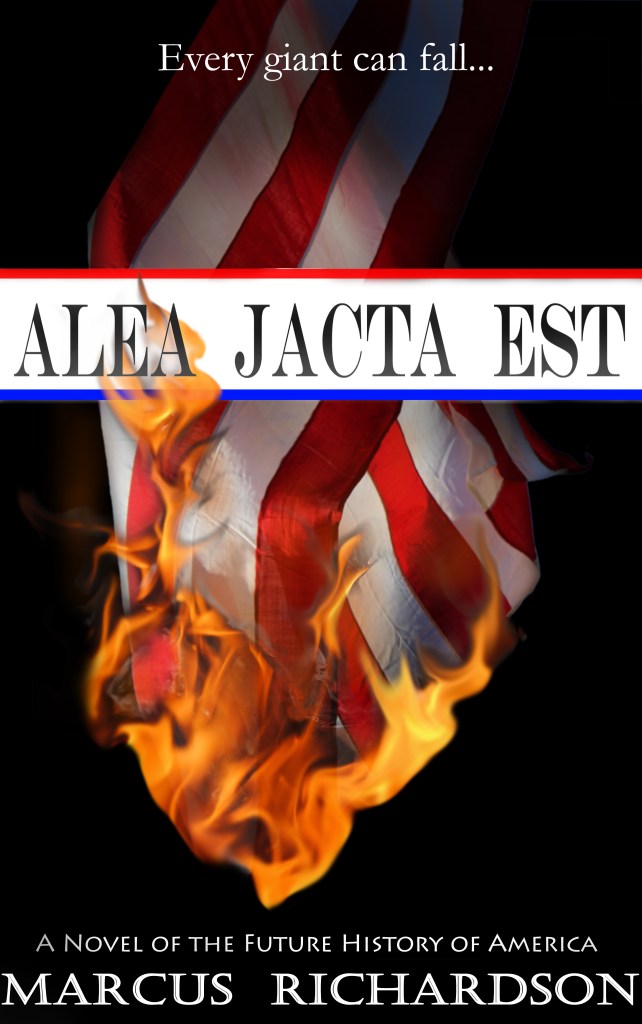
Some of you may have read a bit about that in my book Alea Jacta Est. The chapter with Erik watching the blackout is taken right from real life.[1] But again, it didn’t affect me directly—I was in Florida, 1,000 miles south. But I watched, I learned, I planned, and most importantly, I thought about ‘what if’. I think that’s why I write my books—they allow me to explore ‘what if’ safely and see what lies around the bend should disaster strike.
By the time the hurricanes of 2004 hit, I was married—no longer was I beholden only to just my own hide. I had to think about my wife—what would happen if both of us were trapped at home? We’d need double the supplies. What about if one of us was at work? I had to think up how we’d communicate, where we’d meet—do we bug out or in? What does that even mean? The responsibility grows exponentially for every person added to your family or group.
I learned to control anxiety and stop worrying and start doing. Either lists or stockpiling or shopping—doing something to get you closer to your goal of self-reliant living helps. Tremendously.
The Unprepared’s First Mistake
The biggest mistake I see when planning for disasters is the age old question: Why should I—do I—want to be self-reliant? Isn’t the government going to take care of me in a disaster? Isn’t that why we pay taxes?
Answer: When seconds count, the police are only minutes away.
Corollary: See Hurricane Katrina, the aftermath.
The government is there to protect us from big things like invasion and there are some who doubt they can even do that effectively—don’t get me wrong, our military is more than capable of doing so if left to their own devices. I wouldn’t bet against the men and women who wear the US flag on their shoulders for any amount of money. Ever.
But the politicians who tell them where to go and what they can and can’t do…they’re the ones who’ll get us all killed. The military and first responders—the good guys in government—are not there to prevent an earthquake or stop a hurricane. Hell, they can’t even get to you all that fast afterward because they have to use the same roads to bring in equipment that are likely blocked with fallen trees or floodwaters or protests. They have to land their helicopters somewhere else because of the downed power lines and trees.
See what happened in the aftermath of hurricane Helene in North Carolina? Case in point.
In the end, when you look at blizzards, hurricanes, earthquakes, floods and more recently, civil unrest—that’s rioting for anyone that believes the “mostly peaceful protest” line from a few summers back—first responders are always going to have to wade through all the crap leftover from whatever disaster you’re dealing with. That takes time.
Again, when seconds count, the police are only minutes away. Think about that. Go ahead and let that sink in for a moment.
The army isn’t going to show up at your door in the first hour after the hurricane passes. You’ll see Bob across the street first, shout “You okay?” or “Hey, my wife is hurt!”, etc., and start working from there. Then, when you’re sweaty and halfway through clearing the tree from your driveway that blocks the road, the police may show up or a helicopter might buzz overhead.
The serious government “help” that arrives with food and water usually doesn’t seem to show up in the first 24 hours unless they’re ready and waiting for the disaster (like they try to do now, thanks to the infamous post-Katrina FEMA debacle). Even then, it’s hit or miss—and do you really want to trust your life and the lives of your family to ‘hit or miss’?
Don’t get me wrong, I’m not disparaging the brave men and women who put their lives on the line and leave their families go help yours in an emergency. But they’re only human, and if the roads are clogged with debris, no amount of heroism or good intention is going to get past the blockage without chainsaws and sweat. And that takes time.
And when seconds count…well, you know the rest of that.
To me, self-reliance is not defined literally. I don’t mean being an ‘army of one’, living off the land, shunning interaction with the outside world while setting up a hermitage. Self-Reliant to me means being able to care for my family and those around me for short to medium time frames (which include months, but not necessarily excludes years). If I have to take care of my family through my own prepping for years, we’re talking a TEOTWAKI event and that’s a whoooooole other can of worms. Don’t worry, we’ll get to that when we get to post-apocalyptic fun in another post. You could also read my books…*ahem…*to see what I mean.
I want to take care of myself and my family (especially now that I have children) as I see fit, not shuffle to a shelter and get packed into a warehouse with other refugees during a crisis. What will you eat? What will you drink? Where will you sleep? Who knows—that’s for some nameless bureaucrat or bean counter to figure out. If they show up in the event of a real emergency.
Because I and millions of my fellow Americans choose NOT to be reliant on others of questionable morals and willingness. Remember that no matter what side of the political spectrum you reside, the other side hates you and I wouldn’t put it past them to be a little passive-aggressive when the excrement hits the oscillating device. For that reason, I must endure the stigma from those less prepared or educated or intelligent that something is wrong with me because I want to take care of myself and personally ensure the safety of my family and loved ones.
I know, it’s like the world is taking crazy pills. It ought to be the other way around. Only those people who willingly blindly trust their lives and the lives of their children to faceless representatives of a government that long ago stopped really caring about the people who pay the bills through taxes…those are the people who should get the side-eye from everyone else. Faith in a Higher Power, Whoever or Whatever that is to you, is admirable. Blind faith in political appointees is abject stupidity in my book(s).
Luckily, the times we live in now are awash with people like you and me—if you’re reading this blog, then you’re probably a fan of my books and that right there is a mark of distinction, my friend. And if you’re a fan of my books you probably know exactly where I stand on being prepared. So, I guess I should change that ‘me’ to ‘us’.
Welcome to the movement.
As always, keep your heads down and your powder dry, my friends, for we live in interesting times.
NOTES
[1]: Side note, the apartment complex Erik and Ted live in is modeled off the one my wife (fiancée at the time) were living in. It was called Bermuda Estates, though it’s not called that now.

 The Freeholder Press
Leave a comment