Welcome back, Freeholders! And Happy New Year!
I know there are a few places in America where things have gotten off to a shaky start, and with that in mind, I think today’s post is all the more applicable. You never know when bad stuff is going to happen, so the only way to combat that is to be prepared.
In a previous post I wrote about the prepper mindset and what it meant to me, gave a few examples of why I started down this path, and dipped my toes into what it’s all about.
This week, I thought I’d offer some definitions—as I see them—to keep things in perspective as we move forward.
What’s in a name?
For starters, how do we define what it is to be a prepper? The classical definition is one who prepares or is prepared for unknown circumstances that affect his or her life. In common parlance, I think this means somebody who knows life isn’t going to hand everything to them on a silver platter. At some point, life (including Ma’ Nature) might will throw you a curveball.
The vast majority of people who don’t prepare end up on the nightly news. Next time there’s a flood, just watch for reports of people who were warned and decided to stay, or people who’ve “never seen anything like this” who were trapped in their houses or cars. Look for reports of people who decided to drive through water during flash floods without knowing how deep it was relative to their car—or how deep it was in general. These people are, to greater or lesser degrees, unprepared. To be unprepared is to be at the mercy of forces outside your control.
I don’t know about you, but I don’t like that idea.
I’ll freely admit, however, that I don’t have a ‘60s era fallout shelter in my basement, stocked and ready to house my family in the event of an asteroid strike/Yellowstone eruption/nuclear war/alien invasion. Butt does that mean I’m going to stand here with my thumb up my butt while a major ice storm/snow storm/hurricane/riot advances on my location?
In a word, hell no.
Being prepared means many things to many people. I’m going to expand on the definition a bit here, within my own paradigm. I think “prepper” is part of a sliding scale representing the movement of preparedness.
The Prepper Spectrum
At one extreme, we have those who’ve been called survivalists. This is the name people in the mainstream media and Hollywood, including their friends in the left-leaning political parties, have called those who prepared for fill-in-the-blank event…for almost a generation. I find that especially ironic, since during the Great Depression, the Dustbowl, the World War years, just about everyone—regardless of political persuasion—prepared to some extent or another.
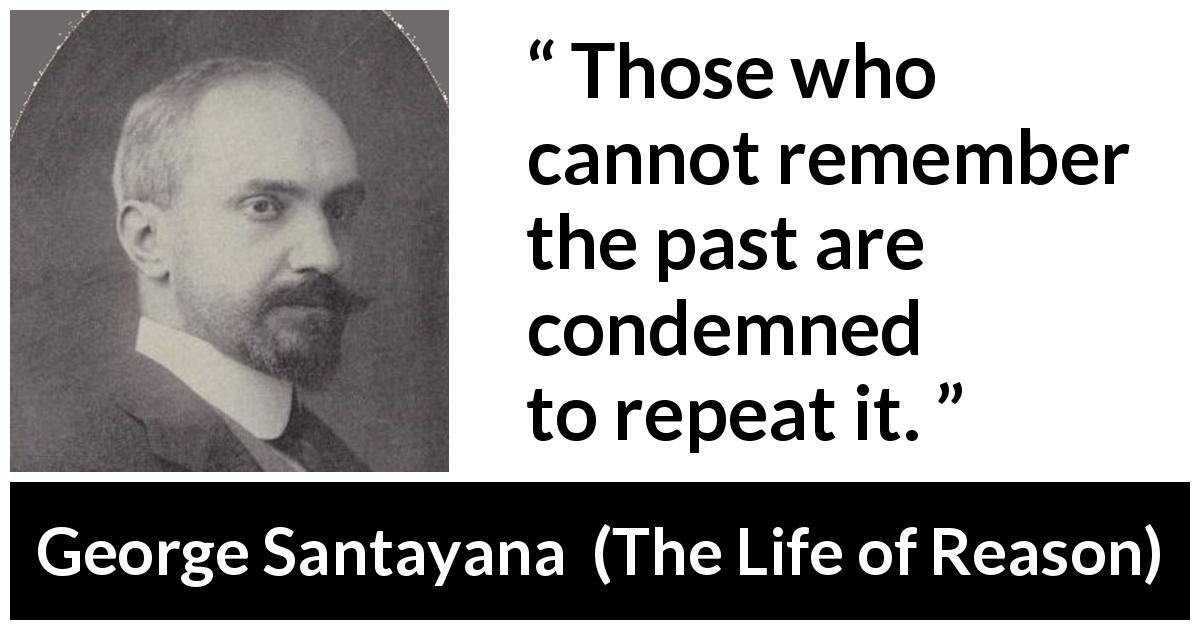
Life was far too unpredictable to not prepare your family and loved ones for what came next, be that a harsh winter, a bad crop, job loss, or a global war. Don’t laugh, not only did that happen once, but twice in the span of one generation. Think it can’t happen again? Look at Ukraine, Taiwan, or the Middle East. SHTF is bubbling along just like it was in 1938, and we’re getting close to repeating history, muchahcos. And if you’re reading this post, you likely know the old adage about history:
It was only after the freedom of the 1960s and the excesses and hedonism of the 70s and 80s that the political left started to look down on anyone who didn’t just ‘go with the flow’ or expect the growing omnipotence of the government to ‘handle things’. Those who continued to follow the trend of their ancestors and stashed some extra food away for the winter or unexpected hard times, etc., became ‘survivalists’, and worth of derision and scorn.
After all, the Cold War had settled into a kind of stalemate by then—sure, Soviet Russia was still a threat and still crazy as they continued to talk about nuking America, but the days of the Bay of Pigs and really scary times like the Cuban Missile Crisis were decades in the past.
And so as people in power and those able to influence people in power continued to try and influence popular culture. Through media consumption, they insinuated in the news or entertainment (or both) that to prepare for a day when the governmental authorities couldn’t—or wouldn’t—help meant you were on the foaming-at-the-mouth fringe of society. More and more ‘normal’ people came to believe through sheer the bombardment on radio, TV, movies, books, and magazines, that those survivalist people were different, and by different I mean scary.
Ironic, since that side of the political spectrum that constantly talks about openness, tolerance, and diversity is so…intolerant…of other ideas.
But I digress. Back to the prepper spectrum. What is a survivalist? To me, a survivalist is one who is taking their preparedness to a level far beyond what the average—if there is one—person wants to or can accomplish. The survivalist is typically focused on long term preparedness—we’re talking years and decades here—and sometimes focuses on huge events like the much ballyhooed Yellowstone Caldera eruption.
In this corner…survivalists
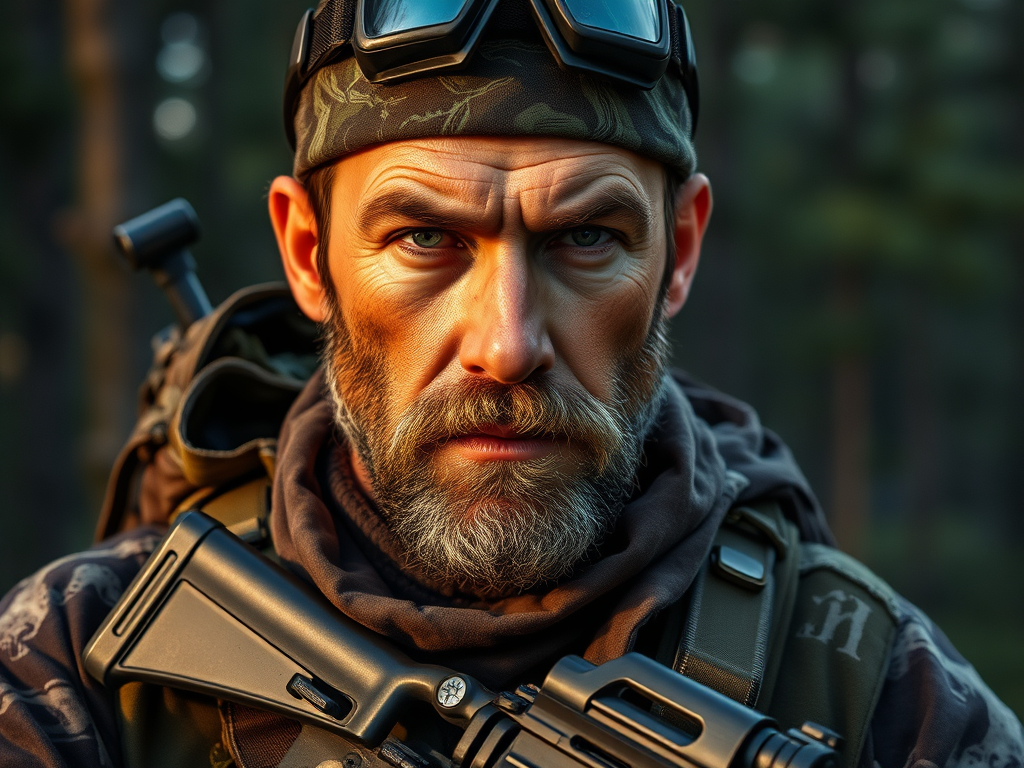
Survivalists are highly focused and spend a vast amount of resources and time preparing for everything they can think of, stock piling food, water, medicine and weapons. The MSM and Hollywood have tried to paint the survivalist as the quintessential prepper. While that may have been true twenty years ago, this is not the case now.
The survivalist has the same intention as the average prepper, only they’ve taken the plunge and gone full-in. Think of the lone wolf, the man who reads gun porn and can fend off an invasion from European UN peacekeepers all on his own, live off the land, and has multiple bug-out locations–just in case FEMA takes over one or two for re-education camps before he can get there when the SHTF.
If the excrement truly hits the oscillating air movement device, count on these folks to still be around to pick up the pieces when the dust settles. They might be alone, or start a new nation in the process, but they’re gonna survive come hell or high water, and you can take that to the bank (before the economic collapse, that is).
In this corner…the clueless

At the other end of the spectrum is the completely unprepared person, the ‘sheeple,’ the much maligned person who bleats “the government wills save us.” They rely on others—especially those in authority positions—for everything.
These are the people who don’t know what to do until someone tells them. They have maybe enough food for dinner (tonight) in their fridge, but are more concerned with going out with friends or watching Netflix and chilling than buying groceries for the next day/week/month. I think many of these people are young—old enough to be out of school and in their first few years of independence, yet too young to have much as far as houses, cars, income, or responsibilities are concerned.
They likely live in large urban areas, where there’s no need to have a fridge stocked with food because they can ride the elevators of their high rise and walk a block to the local bodega to get a sandwich and drink for dinner. Or maybe they’ll take an Uber to Starbucks for coffee and breakfast every day so there’s no need for milk and cereal at home.
When there’s an emergency, be it a snow storm or hurricane or “mostly peaceful protests” these are the people who will stand there watching what everyone else does, maybe holding up a cell phone to record whatever is happening so they can make a juicy post on Facebook or Twitter X later.
They also include the people who are oblivious to it all and simply have their heads down, texting friends about how crazy last night’s party was. They are content with life and happy to be spoon-fed everything they need, when the want it—and the government, media and large corporations are all too happy to do so.
Turning over personal responsibility to others merely gives the ‘others’, be it government or corporations or individuals, power over you. Our Founding Fathers are turning in their graves at the very thought.
Stuck in the middle with you…

And where do the majority of people fall? I believe most people in the movement land in the middle—where the term prepper finds it’s true home. A prepper, in my mind, is someone who pays attention to current events (maybe not quite as closely as the survivalist but far more closely than than the unprepared) and keeps track of weather and other natural events that may impact his or her life. They assess the risks of their current location (be that home or work or school) and prepare for what risks they deem to be most likely to happen.
Where a survivalist may prepare for all risks or focus on the big ones—economic collapse, foreign invasion, the Yellowstone super-volcano, EMPs, CMEs, etc.—the middle of the road prepper will narrow their focus.
For example, say you lived in Florida. The survivalist would prepare for hurricanes and thunderstorms, but also migrant waves from Cuba, tsunamis, and riots caused by economic collapse or foreign wars. Perhaps even an EMP launched from Cuba thanks to North Korea.

The unprepared would choose to be blissfully ignorant and only evacuate at the last minute, adding to gridlock during hurricane season, while complaining about not getting time on the beach.
The prepper will focus on hurricanes, storing food and water for when the power will inevitably be offline in the aftermath of a direct hit by the dreaded hurricanes. They’ll have a generator and the knowledge of how and when to use it—i.e., not inside a closed garage—just like the survivalist, but they might not have a soundproof faraday cage around it to prevent others from knowing they’ve got the generator in the weeks and months post-storm. They will be ready, they will be wary, but they won’t go to the extremes that a survivalist will.
Where the survivalist may have 5 years of food on hand or more, the prepper may have 5 months or anything from 3 days to 3 weeks and everything in between. The prepper will likely have a get home bag (GHB) in their car so that if they’re stranded at work by storm surge flooding, sudden snow storms, or riots, they’ll at least have some tools to make it home on foot (including food and water for anything from a few hours to a several days).
My point is, they’re prepared and ready to GET HOME, where the bulk of their supplies are. In contrast, the survivalist will likely be the first to strike for the hills when the balloon starts going up and will already be off grid and in the woods when SHTF. They won’t need to get home, they’ll be long gone to their bug-out-location, likely armed to the teeth.
While the prepper most likely has a weapon (where allowed by law), they may only have one or two firearms, like a pistol and/or shotgun compared to the arsenal a survivalist is more likely to have. Not that I’m saying an arsenal is a bad thing. Our Founders never said we had the right to keep and bear two arms.
Remember, on my spectrum, the survivalist is planning to survive ad infinitum by his own wits, without outside help in a situation of permanent, or near permanent societal break-down or all out collapse. They’re in it for life.
The prepper plans to survive a temporary lack of outside support, with the full expectation that some day, be it 3 days, 3 weeks, or 3 months, somewhere down the line the lights will come back on and things will get back to normal. Preppers spend a decent amount of money on supplies and practice their skills, but no where near the hard-core survivalists who not only practice skills but live them to be ready for when the balloon goes up.
What about the unprepared? Who knows what the hell they’re thinking. I believe most of the time they’re not, actually. At the far end of their group, they run on instinct and instant gratification. They look to others to warn them, advise them, tell them what to do, and take care of them when things go south.
These are the people who turn to looting as a means of survival in the aftermath of an event, either for sustenance or sport. See the aftermath of Hurricane Katrina.
Keep in mind though, these three categories are representatives of large groups of people that may individually fall closer to one label or another. This is by no means an attempt to lock everyone who prepares into just three categories. You can have people who consider themselves preppers who plan for a comet impact wiping out most of humanity but have not a single firearm and no bug-out location—yet they identify with the survivalist more than the average prepper because they have 10 years of food and the skills to live off the land.
Like I said, it’s a sliding scale, and by no means exhaustive. You could spend a lifetime writing about the differences and similarities between someone who prepares for Armageddon versus someone who prepares for a blizzard or ice storm.
I personally fall smack dab in the middle. I plan for winter weather like blizzards (hello, Illinois) and to a somewhat lesser extent, severe weather in the summer like tornadoes (hello, Illinois). I prepare by having some extra food on hand for my family. I prepare by having the means of cooking said food without power…camp stoves, propane grill, fire pit, fireplace. I do what I can to make my house safe and secure for my family. I pay attention to news and current events, and I pay attention to what is happening locally, from the town where I live to the street I live on.
When we lived in Texas, I focused on tornados and to a lesser extent toxic spills (railway incidents…don’t think they can happen? Look up the Palestine Train Accident). A fairly major railway line ran through our backyard about 2 acres from our house and I can’t tell you how many times I saw tanker cars carrying God-knows-what past my house day and night. I had a plan in place if one of those mile-long freight trains suddenly jumped the track and dropped a half-million gallons of chemical death in my back yard. Thank goodness I never needed to put that plan into motion…but the point is I thought about it and prepped for it.
I never had to implement that plan, thank God, but I had to put my tornado preps into play a half dozen times (we even spotted a twister form in our neighbor’s yard, saw their shed explode and the debris swirl up into the air like a flock of starlings).

Likewise, when we lived in Florida, I developed a plan for hurricanes—after the first three hit, I was as ready as I could be for #4. I filled a “hurricane” bag with 3 days of food and water for my new wife and myself, including important documents and tools like a portable emergency radio, work gloves, and the like. Should we need to evacuate (on our terms, not when the government decided it was time—by then it would be too late), we could leave within minutes of making the decision.
Anyway, I think post is long enough for today. Hopefully if you didn’t already know the difference, I’ve been able to shed some light on the idea of what a prepper is and how the term ‘survivalist’ with all its negative connotations, doesn’t really apply to the majority of preppers. Don’t get me wrong, I’m not saying anyone who calls themselves a survivalist is crazy, unlike the MSM. On the contrary, I think the only difference between a survivalist and a prepper is the extent to which they are prepared. Nowadays, the terms are bantered around and interchangeable to some people. Others shun the term survivalist, while others wear the label as a badge of honor. ‘Prepper’ seems to have entered the lexicon of today’s culture to the extent that whether the MSM wants to or not, it’s forced to use that term when describing us.
Yet they still manage to get that dig in—hence the name “Doomsday Preppers”. As if saying, if you’re going to be prepared for something, you’re preparing for the end of the world as we know it (there’s that TEOTWAKI again) and everyone knows that means your crazy.
The good news is we’re turning that on its head. More and more people are not only preppers, but proud of it, and not afraid to tell someone they’re prepared. Sometimes you should be afraid to let that be known—don’t worry, we’ll discuss going gray and OPSEC in a future post.
Until next time, my friends, keep your heads down and you powder dry, for we live in interesting times.
 The Freeholder Press
Leave a comment