
Heads up y’all: This is from my old blog (about 10 years ago) but it’s still relevent today, so I thought I’d share it with you, because back then, I think my dad was only one reading anything I wrote!
Howdy Freeholders!
I was asked by a reader:
“How do you come up with the titles for your books?”
This question pops up enough I figured I’d make it the topic for this week’s Freehold Friday.
So, how do I come up with the titles for my books?
As I sit here on the deck, watching my older kids fight — er, play — I can honestly say writing is indeed hard work. Most people think authors just sit down at a computer, steaming cup of caffeine in one hand and start pounding out pages and pages of beautiful prose.
Well, that couldn’t be farther from the truth. Granted, when I sit down and I’m left to my own devices in peace and quiet, I can crank out the rough draft of a chapter in about an hour and a half. That’s the easy part.
The only easy part.
I can stop and start as I like and pick right up where I left off the last time. But, once that draft is done and it’s time to revise — so it actually makes sense to a reader — whoooeeeee, that’s a whole other can of worms.
The only times I have available to work on editing is the hour before dawn (or anyone else gets up) and the hour or so after the kids go to bed and after the kitchen is cleaned for the night. Juggling my ever supportive wife, three kids, the house, the yard, the dogs — on top of cooking, cleaning, and everything else….yeah, finding time to write is a bit of an on-going challenge. Especially during the summer (school…ah…a dream…)
So, you can see I don’t have time to sit around and think up perfect titles. My sitting-around-and-thinking times are reserved for story ideas and blog post ideas.
The Answer
For me, it’s quite simple: I don’t find the title, the title finds me. I am one of those writers that like to see their story as it’s revealed — as I mentioned last time (if you missed it, here’s the previous post about where story ideas come from) like Stephen King says in On Writing, I unearth the story as I go. I personally am not a discovery writer, nor am I a plotter. [1] I’m a hybrid author, in that I make an outline, but it’s only the bare-bones style, with a sentence or so of description per chapter. Then I use the discovery method and write each chunk, letting the characters tell me what the hell is going on.
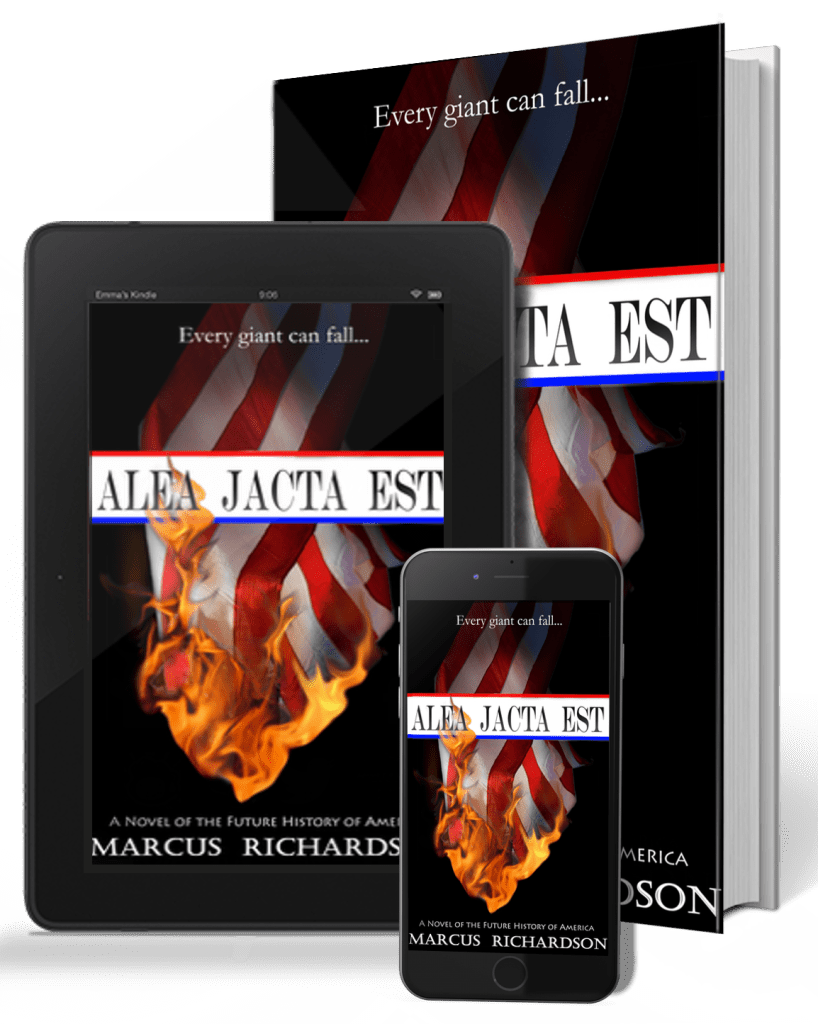
Regardless, for Alea Jacta Est, I wanted something different (boy did I find that). In Latin, alea jacta est means “the die is cast.” [2] Kind of a ‘point of no return’, so to speak.
I likened that to the moment faced by Erik Larsson [3] when he realized that if the community didn’t band together and start organizing, they would all either starve or be driven from their homes or even killed.
Do or die, baby.
Leaving that aside, I had taken 4 years of Latin back in my school days and I’ve always admired the Romans (we are, in terms of Western Civilization, the direct heirs of Rome), and wanted to use a Latin phrase for the title — because why not? Put it all together, and Alea Jacta Est was born. [4]

Apache Dawn‘s title generation is a different story; no Latin here. The title was originally conceived as Oath of Office, as I was planning the book to be more of a political drama about the Vice President Barron and how he navigates the attacks, civil war, and international affairs. But towards the end of the book I realized that the Oath part mostly applied to the President(s) and no one else. All well and good, except that by the end of the revision process, said President and his plotline created the background story, the undercurrent of tension that is applied to the other POV characters.
So, if Oath of Office didn’t apply to the majority of the POV characters (only one — the President) what then? Well, I realized that a certain code phrase used by the military in the story to denote…uh…hmmm…how to say this without giving away a pretty big spoiler….?
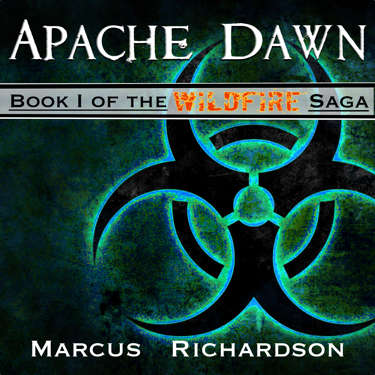
Okay. Apache Dawn is the code word I made up. That brevity code either has a direct or rather serious impact on every character in the story — and the spin-off stories I’ve already started daydreaming about and writing, heh heh). Plus, I kinda liked how it sounded. By the time I had finished the first draft, I at last realized that Apache Dawn was the title had to be the title of the book.
Hey, at least it’s not Latin! I can’t tell you how many people have asked me what alea jacta est means over the years!
Anyway, you can see now that I don’t just reach up into the air and pull a name out of the sky. I try to have the title reflect something major in the book, albeit with subtlety. And when that fails me, then I sit on the deck, watching my kids fight — play — and hope something pops into my head.
As always, keep your heads down and your powder dry, for we live in interesting times, my friends.
Notes
[1]: I hate the term “pantser” mostly out of a sense of propriety for my writing cousins across The Pond, for whom “pantser” has a much difference meaning…that’s what you get for speaking the King’s English instead of ‘Merican, but I digress.
[2]: It’s one of Julius Caesar’s most famous quotes, uttered when he crossed the Rubicon — at the time, the river marked the boundary of Rome. To cross the Rubicon at the head of an army meant you were intent on conquering Rome and it was considered an act of high treason — punishable by death. It’s the ultimate all-in, balls to the wall, go-for-broke decision.
[3]: The main character of Alea Jacta Est, for those who haven’t read the story.
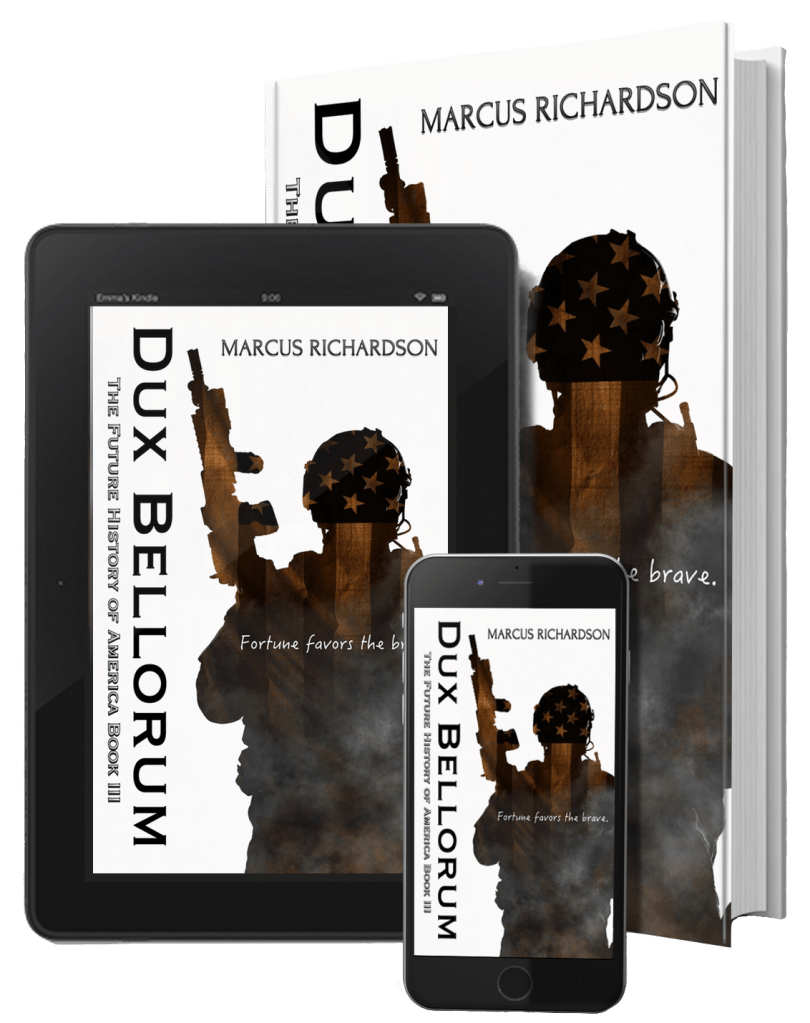
[4]: Did I stop there? Nope. The next two books in the series also bore Latin titles: Sic Semper Tyrannis (“Thus always to tyrants”) and Dux Bellorum (“War Leader”) round out the trilogy.
 The Freeholder Press
Leave a comment