Welcome back, Freeholders!
As things seem to get worse and worse out there, from the weather—which is always unpredictable whether (see what I did there?) you believe in ‘climate change’ or not—to terrorism and natural disasters, I can’t help but see more and more references to a movement in America taken up by a certain group of people. You see them referred to in the news as ‘survivalists’ or, in a not so cynical term, ‘preppers.’
They even star in shows like Doomsday Preppers and strong elements of the idea behind being prepared pop up over and over again in themes from movies like The Road, Deep Impact, and Greenland, to TV shows like The Colony, BBC’s Survivors, or The Walking Dead. If you actually start looking, you’ll see post-apocalyptic “fantasy” all over the place on the big and small screens (Last of Us, anyone?). And there’s more and more out every year it seems.
As this is something near and dear to my heart, I thought it’d be fun to write a series of blog posts on preparedness. So here goes!
Preparedness: What is it?
Why are there so many shows and movies recently with a strong undercurrent of survival/preparedness/end of the world drama? Because there is an audience for it. Evidently a large one, judging by the continued popularity of The Walking Dead and it’s spin-off series. Why zombies, you ask? Well, don’t focus on the zombies, the story is really a tale of survival and what happens after the end of the world as we know it. Replace zombies with super-flu and you have the basis for my Wildfire series…
Just as recently as four years ago, anyone into ‘survivalism’ was probably listed as unstable or worse (according to the main stream media) a ‘gun nut’, hoping for the end of the world so they could get a chance to loot and shoot.
Well.
I won’t say there isn’t anyone out there that fits that bill, but I have to believe that the vast majority of people who subscribe to the prepared lifestyle are decent and honest—Americans who truly get what this country was founded on. They are the modern day descendants of our pioneer ancestors and they not only see storm clouds on the horizon, brother, it’s starting to rain.
I know what you’re thinking. Pioneers? WTF?
Stay with me for a second here. Think on this: at the turn of the 19th century, America was still an infant nation, largely consisting a few big towns on the eastern seaboard like New York, Boston, Philadelphia, Baltimore, and Charleston; a vast swath of farmland and smaller communities, and the unknown hinterland, full of bears and natives.
Many people lived on the edge of the civilized America. They could look out the back door of their log cabin house and see a cleared field of crops, then spot a solid wall of trees, hiding the dark secrets of what lies beyond. Maybe those farmers took a break on a sunny afternoon from digging in the fields and felt a trickle of fear run down their spine. Was there someone out there watching from the trees? Was the local hostile tribe about to launch a surprise attack on the homestead?
Why did they work so hard anyway, out in the hot sun scrabbling in the dirt to grow crops in dangerous, unknown territory, beset by Indians and wolves or bears that didn’t appreciate the intrusion in their territory?
Because those pioneers knew if they didn’t work and sweat and bleed in the spring, summer, and fall, they’d die in the winter. When the snows came, it didn’t take much, for example—in the Shenandoah Valley—to block passes and make travel by carts or covered wagons impossible. Sure, you could still venture out on a horse, but how would you transport your pregnant wife to a doctor (answer: the doctor had to come to you…maybe…if you could find him and bring him back to your house on his own horse) or raise the hue and cry if that local tribe did launch a raid? What if the snow was too deep for even a horse? Or what about sleet or hail? What happens to your crops when there’s a catastrophic storm that sometimes happens in the winter?
The answer: if you don’t have enough grain stored away, and a safe place for your animals to survive the winter, and a solid stock of dried or salted meats, etc., put away in the root cellar, you probably starved to death.
The resourcefulness, frugality, self reliance, and general preparedness of our ancestors—especially the ones out on the frontier—is a shining model of how to survive. For if you don’t survive first, you can’t thrive, and if you can’t thrive, you and your community/state/nation will fail.
It’s only through our modern technology, medicine, and the ever-present nature of electricity that we have—as a species—have gone soft. I’m talking generally here, so don’t clutch your pearls too quick. I’m not talking about people in 3rd world countries or subsistence farmers, or any of a number of people who live in the Alaskan bush, etc.
And for the record, I count myself in that group weak humans, too—I’m in no shape to go all Neanderthal and survive in the snow that’s currently falling outside my windows or live in a cave and kill and skin a deer with nothing but a flint stone or a spear. I’ll be the first to admit that I’m no weapons expert either, though I know how to shoot and I can probably ruin someone’s day with my sword. But I have the mindset to prepare.
The mind is your greatest tool. Use it.
What exactly does that mean? I look back to the Boy Scouts—they ingrained in me the idea that you should Always Be Prepared. To survive, to render aid, to lead, to escape, whatever—you should always be ready.
I remember learning how to start a fire without matches or lighters. I remember learning to build primitive shelters in the woods and how to filter water (granted, at a very basic level) and make rope and use my pants as a life preserver and tread water for hours on end…the list goes on. At the time, I chafed at the idea of jumping into a pool fully clothed, or learning how to drag a drowning person back to shore (without them pulling me under too!). I hated the idea of CPR and possibly cracking someone’s ribs to get their heart going. But now, looking back on that knowledge gives me some comfort when the nightly news tries to give me a case of night terrors.
I’d rather have something and not need it—be it a tool, weapon, skill, or knowledge—than need something and not have it.
Mrs. Richardson and I used to live in Florida. They get these really big wind storms down there—you may have heard of them, they’re called hurricanes—and every now and then they’d clobber our area and knock out the power/water. Granted, our first year in the Sunshine state saw us smacked by four hurricanes, living in an area that hadn’t seen one in decades, so we got a crash course in how to survive, you might say. The first storm, I was wary but not worried. My parents grew up in Florida and all my relatives did too, so I’d heard all about the storms of yesteryear.
But it really hit home when I saw people in my neighborhood boarding up houses, bringing in furniture, etc. that first time.
Keep in mind, this was our first house, too. We didn’t have a) the money, or b) the time to buy and fit sheets of thick plywood to our windows. We were too busy working to make enough money (see (a)) to pay the mortgage.
I was young and felt pulled by the obligation of my job to help prepare the store (I worked as a department manager at a retail store that sold sheets and towels, (you’d know the name) at the time — I’ll post about the mindset of the customers I saw the day the storm struck later). Besides, I didn’t have the tools necessary to reduce 4×8 sheets of 3/4” plywood to fit my windows.
We read all the newspaper stories, watched the warnings on TV, and took in the advice of my parents who’d grown up in Florida and lived through countless hurricanes, including the big ones in the 1960s. We bought a case of bottled water and a few canned goods, but without a plan and without real first hand knowledge, just kind of winged it.
I know, I know. Naive and stupid. But we were young.
As it turned out, we had plans to be in Illinois when the first storm (Charley, 2004) hit our house. We skipped out of town and flew from Miami on the last flight north (they had already closed the other airports and we had no choice but to reroute our flight south, closer to the approaching storm). The pilot announced they’d closed the airport, just a few moments after he went wheels-up and we climbed, shaking in the turbulence, to our cruising altitude.
Luckily the house was undamaged on our return, but we could find precious little information on the fate of our friends and local area while we were way up in the land of corn visiting my wife’s family. The Midwest just didn’t care—most people didn’t even know there was a hurricane at the time.
But the second hurricane of the season—Frances—taught me some real lessons. Keep in mind, we lived on Florida’s Gulf Coast, where I was told by everyone we met, there hadn’t been a storm in 20 years.
I learned that my store of bottled water (one case, leftover from the few weeks past when Charley hit and we were out of town) was woefully inadequate for even two people for more than a day or so without power. The areas around us and just north of us lost power for weeks in the aftermath. I think we lost power for maybe an afternoon and part of the night, but that was it. We got real lucky. Other than flickering lights, we stayed fully powered throughout the storm and aftermath. Like I said. Lucky.
What else did I learn? When the power goes out, you better keep that fridge closed. Yeah, I didn’t think about that and instead of taking an inventory at the beginning of the outage, we kept forgetting what we had and opened and shut that door many times. We lost a decent amount of food to spoilage as a result. Rookie mistake.
I learned that canned beans and cheese and ground beef and Tostitos can make a pretty bitchin’ nacho dinner. I cooked everything while the power was flickering, on the off chance that we’d lose power—which we did—and it was a pretty good meal! And I got to use some of the canned stuff we bought for the first storm.
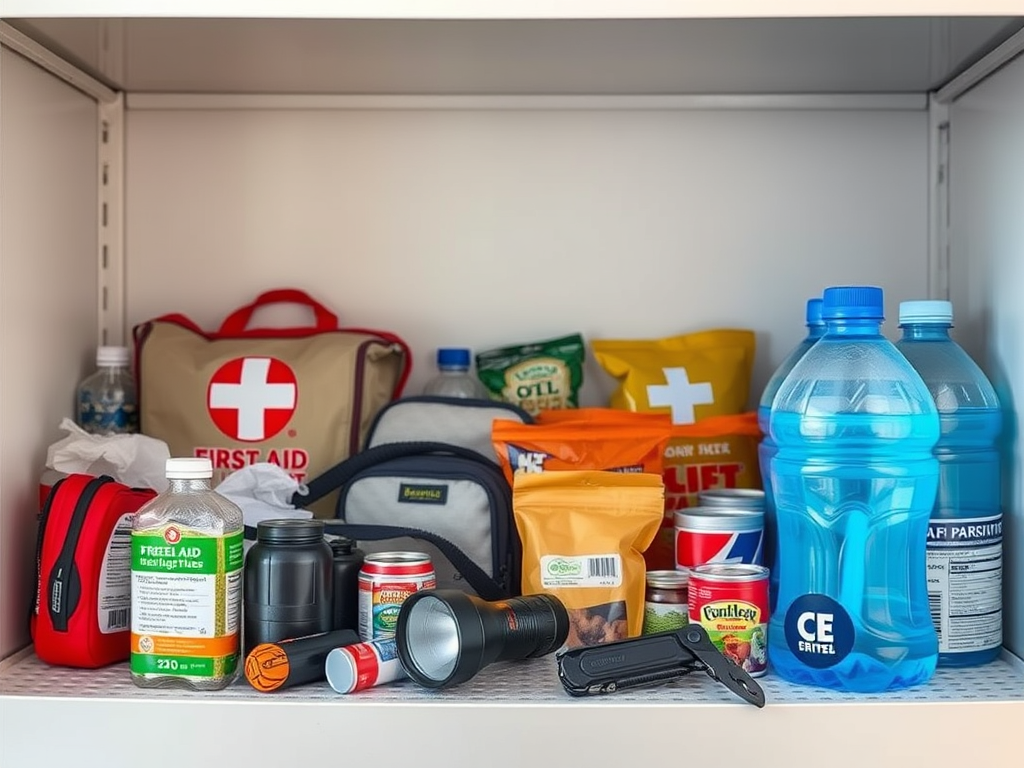
But when the power went out? We had nothing but things we could eat ‘off the shelf’. Some fruit, some dry cereal, bread, and soups, etc. It was an eye-opening experience. We certainly didn’t go hungry, but as I looked at the pantry by flashlight when the sun set, I realized that should the lights not come on quickly, we’d be in pretty bad shape in a few days.
Lady Luck stayed with us through the night and the little tea lights we had (for a decorative wall candelabra we got as a wedding present) kept us from being in complete, humid, darkness. We couldn’t open windows because the rain and wind would have drenched the interior of the house, so we left some cracked for ventilation and had to sweat it out and try not to move much. Another lesson learned: have plenty of batteries (and flashlights!) and candles for when the lights go out—because they probably will.
Each storm that hit, Charley, Frances, Ivan, and Jeane, tested me in different ways from the one before.
Charley opened my eyes about the need to learn evacuation routes, watch the weather closer and plan travel accordingly (instead of waiting and hoping and rushing).
Frances taught me to learn the signs of the house in distress, how the roof creaks in the wind and how not to panic. She also taught me to be ready for flooding—I’ve never seen so much rain in my life.
Ivan rehashed the evacuation plans—most of the roads leading out of town were jammed—people had learned lessons from Charley and Frances and decided to skedaddle.
And Jeane brought home the lesson that even when you think the coast is clear, it’s usually not. She hit us not once, but twice, and nearly three times as she wandered back and forth across Florida, trailing flooding and destruction in her wake.
These events got me in the proper mindset to be prepared. Prepared to protect myself, ensure my survival and to fulfill the sacred vow I swore at my wedding—just a few weeks before Charley hit—to love my wife and be the shield for her in any storm.
I read a lot, I learned, I remembered, and I planned. I started to increase our canned goods stockpile. I bought more water. I planned and practiced evacuation routes, I watched how people reacted in the aftermath (the lines at gas stations when fuel delivery was interrupted were classrooms not to be missed) and I remembered how they acted just before the storms.
I quickly figured out the best time to hit the stores for last minute supplies like milk and bread before the masses of people who waited too long decided to follow my lead. It took 3 hurricanes to figure that out, but when Jeane hit, we were prepared enough that we ignored the storm and installed flooring in our house.
I still remember cutting laminate flooring in the garage with my jigsaw and watching the garage door bend and flex like the side of a giant beast, breathing in time with the wind gusts that buffeted our little house.
In a future post, I’ll talk about the Prepper Mindset that I fell into after these and similar experiences. But until then, keep your heads down and your powder dry, my friends. We live in interesting times.

 The Freeholder Press
Leave a reply to Why Be Prepared: Prepper Mindset – The Freeholder Press Cancel reply